I'm Cosmin Ambru. I work on micro-conversions — the small, measurable steps between a stranger and a signed deal. Most businesses optimise the last one and ignore the forty before it. Fix enough of those and the same traffic, the same team and the same budget produce at least 10% more sales.
A 30-minute call, free. If micro-conversions aren't your bottleneck, I'll tell you in the first ten minutes.
Your reports show one number: did they buy, or didn't they. That number is the end of a chain of thirty or forty smaller decisions — and almost nobody measures the chain. So when sales drop, the only lever anyone can think of is to buy more traffic.
You bought the click. They scrolled, hesitated, left. Next month you buy the click again. The leak between those two moments is never named, so it is never fixed — only re-funded.
A 2% conversion rate tells you nothing about which of the forty steps failed. It is a verdict without evidence. You cannot fix a number — you can only fix a step.
Marketing reports leads. Sales reports deals. Between them sit nine steps nobody owns, nobody measures and everybody blames. That gap is where most of your growth is parked.
You don't have a traffic problem. You have forty unmeasured yes's.
This is the whole argument for micro-conversions, and it is arithmetic rather than opinion. You can check it on your own numbers in the next thirty seconds.
A funnel is a chain, not a number. Each step passes a share of people to the next one, and the end-to-end rate is those shares multiplied together — never added.
Say five steps each pass 60%. End to end, that is 7.8%. Now lift each step by just two percent of its own rate: 60% becomes 61.2%. Nothing dramatic. A clearer button. One less form field. An answer given before it is asked.
The chain now delivers 10.4% more at the end. You did not buy a single extra visitor. You stopped losing the ones you had already paid for.
That is why I can put a floor under the number. Ten percent is what compounding gives you for small, boring, provable fixes — not for a redesign, a rebrand or a bigger budget.
Six steps, each passing the same share of people. Lift each one a little and the bottom of the funnel compounds: (1 + lift)6 − 1. The dashed outline is where you are today.
These are the six openings in the funnel above. None of them is a vanity metric — every one can be instrumented this week, watched every Monday, and widened on purpose.
They stopped. Most visitors never get this far — they leave before the page finishes loading.
They are shopping, not browsing. They went looking for the price, the spec, the comparison.
The silent step everyone forgets. They are checking whether you are a real business before they say a word.
They hand over a name. This is where most forms break, by asking six things when two would do.
Something that costs them: a slot in their calendar, a card in a cart, a question sent.
They came back, or they answered. The cheapest sale you will ever make is to someone who already said yes once.
Two teams, two dashboards, one blame loop. The fix is not another meeting — it is a shared set of steps both sides can see, count and influence.
Whoever measures the steps in the middle owns the growth.
No rebrand, no replatform, no six-month roadmap. We work on what already exists, in the order that pays back fastest.
We write down every step between a stranger and a signed deal — including the ones that happen in someone's inbox, on the phone, or in a WhatsApp thread nobody logs.
Each step gets a number. Most are already trackable with what you pay for today — analytics, CRM, forms, ads. We measure before we touch anything.
We start where the leak is biggest and the repair is cheapest. Copy, sequence, friction, timing, the follow-up that never went out. One change at a time, each one measured.
Gains stack multiplicatively down the chain. Your team runs the board without me and can see, every week, which step moved and why.
Same traffic. Same team. Same budget. The gain comes from people who are already reaching you and quietly leaving — not from a bigger spend.
I can put a floor under that number because it is not a claim about talent, it is arithmetic: a handful of small, provable improvements, multiplied down a chain. The calculator above shows exactly how it is worked out, on your own numbers.
And if the map shows your bottleneck is somewhere else entirely — product, pricing, capacity — I will say so in the first session rather than sell you a programme that cannot work.
Marketing since 2006 — and never only the strategy. The web, the ads, the graphics and the measurement too. That is why I can tell you which step to fix, not just that something is wrong.
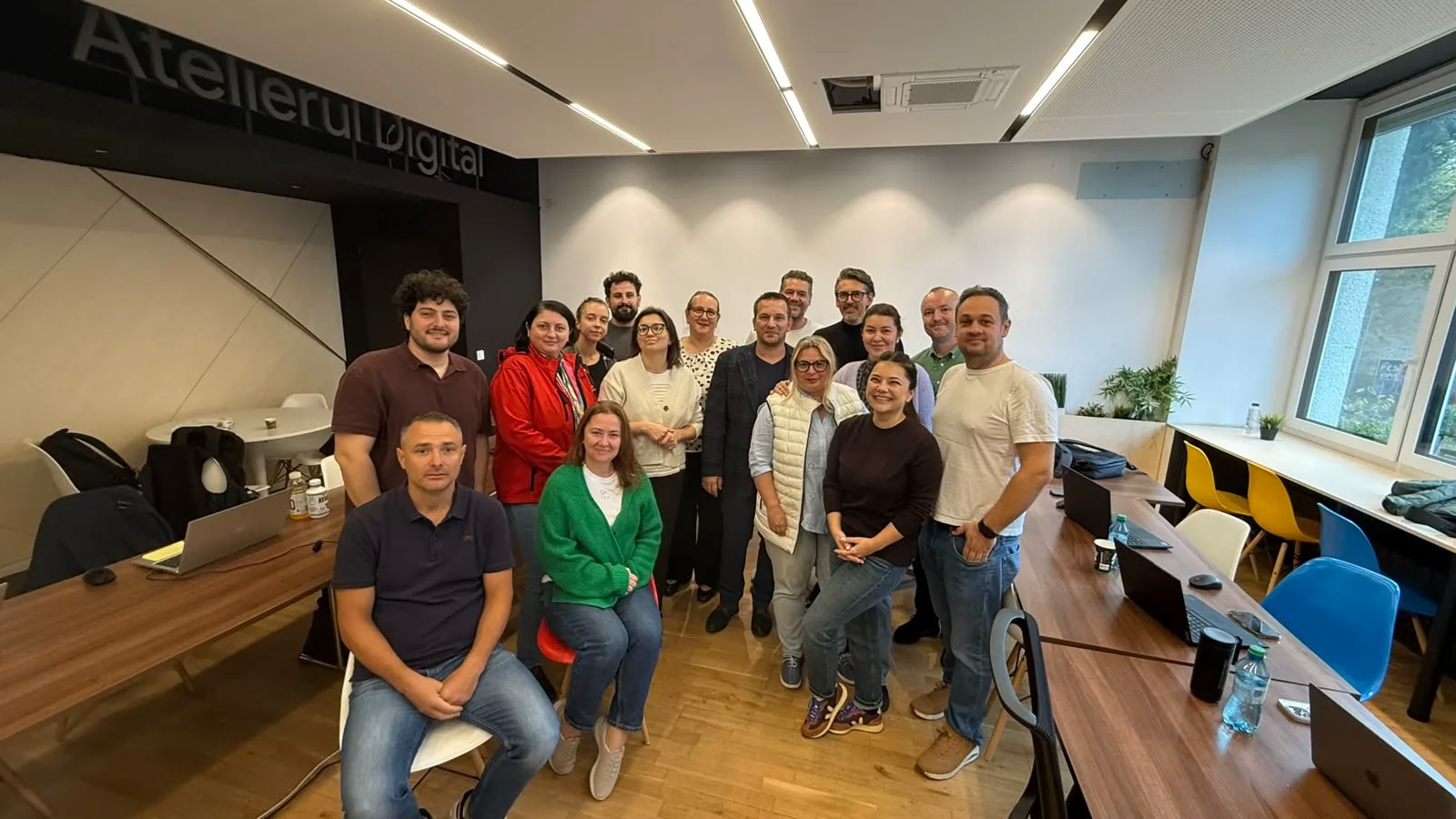
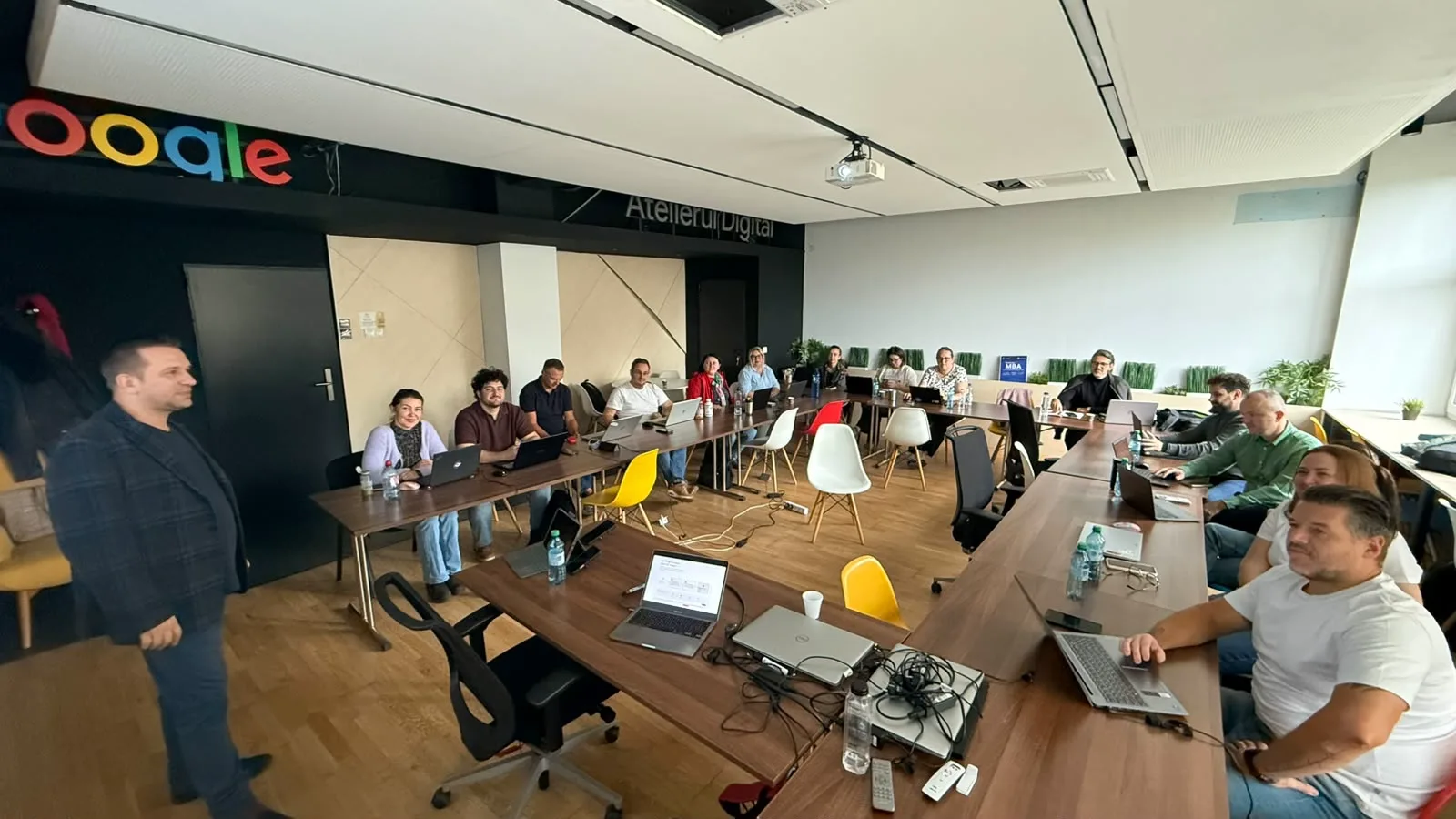
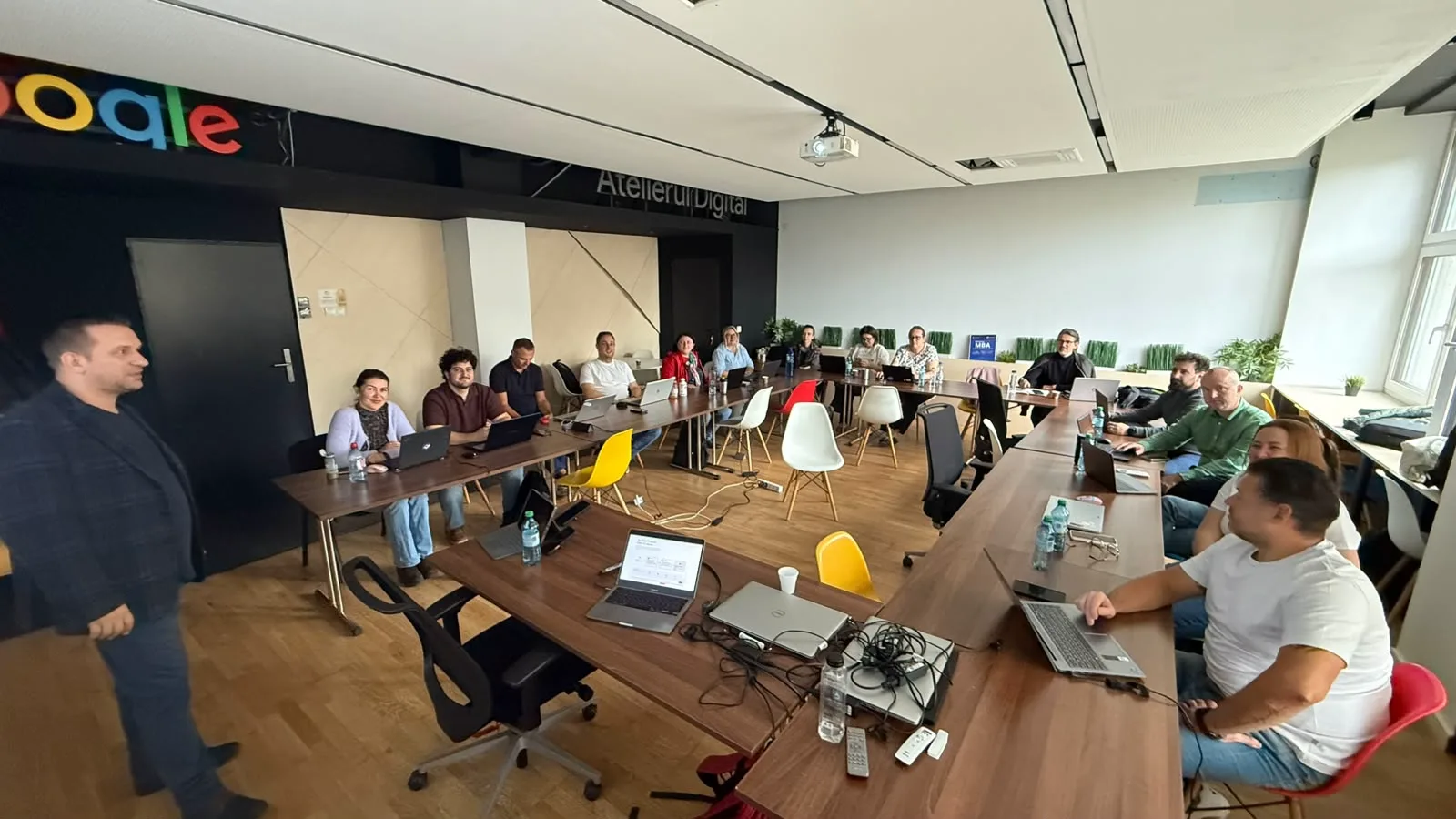
I started in marketing in 2006, added web design in 2007, and graphics, photo and video in 2009. Since 2018 I have been teaching — including as an invited specialist at West University of Timișoara, and in training rooms like Google's Atelierul Digital.
Two decades on both sides of the handoff taught me the thing this whole site is about: businesses rarely lose sales at the sale. They lose them in the quiet steps before it — a page that answers the wrong question first, a form that asks too much too early, a follow-up that goes out on day four instead of day one.
I hold 7 Google certifications, two degrees and three accreditations, and I work with a network of around 80 specialists in web, content, graphics, development, sales and branding — so when a fix needs hands I do not have, it still gets done.
Based in Timișoara, working across Europe and the US. I answer my own messages.
Strategy, campaigns, research, continuous optimisation. Still the core of everything.
Structure and digital experience built to convert — I build the thing, not just the plan for it.
Visual content for brand, ads and clear communication.
Invited specialist, West University of Timișoara. Trainer for teams and founders.
Measurement, follow-up and reporting that run themselves — so the steps stay watched.


Some of these collaborations started in 2006 and never really ended. That is the only review that matters in this trade.
It is the floor I work to, and it comes from arithmetic rather than optimism: small improvements multiplied across a chain of steps. What I commit to is the map, the measurement and the work — and that if the first session shows your bottleneck is not in the funnel at all, I say so and we stop there. I would rather lose a project than sell a number I cannot stand behind.
Analytics usually tracks the last conversion — the purchase or the form. Micro-conversions are the thirty steps before it, most of which are not instrumented by default and several of which happen off the website entirely: in an inbox, on a call, in a WhatsApp thread. Mapping those is most of the work.
Almost never, and I would push back if you suggested it early. A redesign resets everything you have learned and makes the gain impossible to attribute. We fix steps one at a time, on what exists, and measure each one. If a rebuild turns out to be justified later, you will have the data to prove it.
The map takes one session. Instrumentation takes a week or two. The first fixes usually ship in the same fortnight, because I deliberately start with steps that are cheap to repair and quick to read. Compounding shows up over months — but you will see individual steps move within weeks.
Both, and B2B often has more to gain. Long sales cycles have more steps, more handoffs and more places to leak — proposals that go unopened, follow-ups that arrive late, questions answered too far down the page. More steps means compounding works harder.
No. You message me, we look at your situation, I tell you what I would do, and you decide. The first call is 30 minutes and free — and if I am not the right fit, I will tell you inside ten minutes.
Tell me what you sell, roughly how many people reach you each month, and where you think they fall off. Thirty minutes, no pitch. If micro-conversions are not your bottleneck, that is a useful answer too — and you will have it in the first ten minutes.